


How and Why to Visit RAINBOW MOUNTAIN

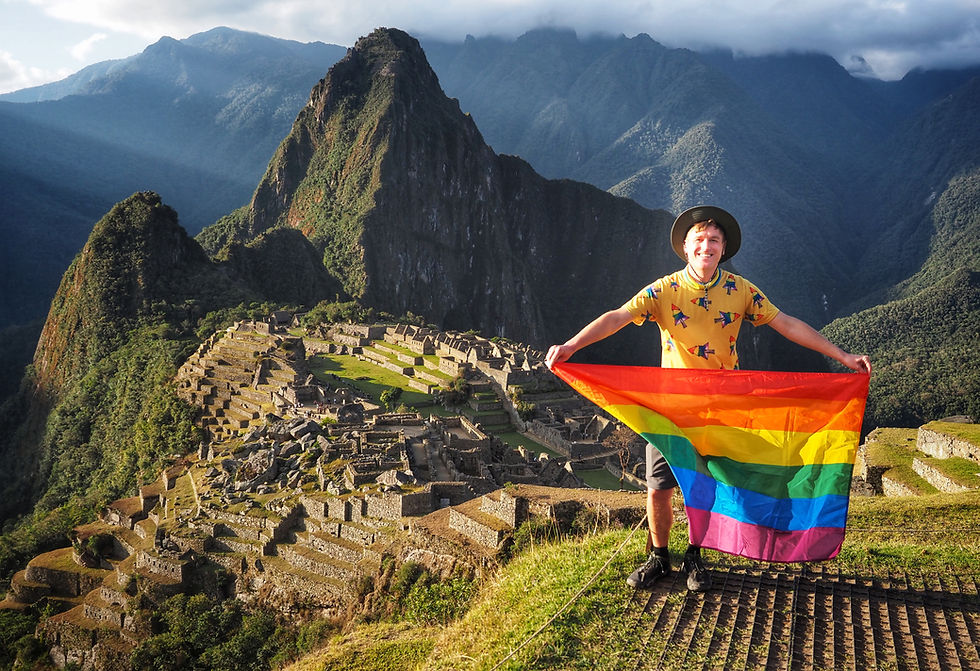
You’ve likely seen it on social media. A mountain peak of multi-colored stripes that looks so picture perfect you assume it’s AI. Yet, it is real. And if your version of queer travel involves visiting both the rainbows waving on flags, along with those striped across the earth, then you’ll want to learn how and why to visit the unique Rainbow Mountain high in the Peruvian Andes.
Why
America has lots of great natural wonders. I believe that so much that I spent three years visiting every one of the 400+ U.S. National Park Service sites. But, across our park system, the closest thing I’ve seen to Peru’s Rainbow Mountain came in the single stripe colors of rocks in the Painted Hills Unit of Oregon’s John Day Fossil Beds National Monument or Petrified Forest National Park in Arizona.

Though, neither of those create the symmetrical point of Peru’s Rainbow Mountain, and both are in very remote parts of the state that aren’t included in most pre-packaged tours, so will take a flight and rental car for most to reach.
However, if your goal is A) To experience a rainbow geologic feature B) To have a trip that involves having someone else coordinate the remote travel, or C) Both: Then visiting Rainbow Mountain serves the niche. With the added benefits of being very affordable for those converting costs from U.S. dollars, and including the allure of international travel,
All in the same time zone as the United States!
How
Though Peru is on the other side of the equator, the lack of a time zone change means it can be reached without having to take a red eye flight adding to the difficulty of adjusting to your new location.
Actually, one of my favorite parts about my week long sojourn to the Rainbow Mountain area was that it began with a recommended rest period in Cusco to acclimate to the altitude (Cusco is at 11,000 feet and Rainbow Mountain at 16,000).
So often we travelers rush to reach our vacation destination, only to hit the ground running, to maximize our time in the destination. Leaving little time to relax. However, before trekking to Rainbow Mountain or its more famous, nearby counterpart, Machu Picchu, it’s actually recommended to take 2-3 days in Cusco to acclimate to the altitude.
2-3 days to relax! And you’re doing exactly what this adventure vacation calls for!
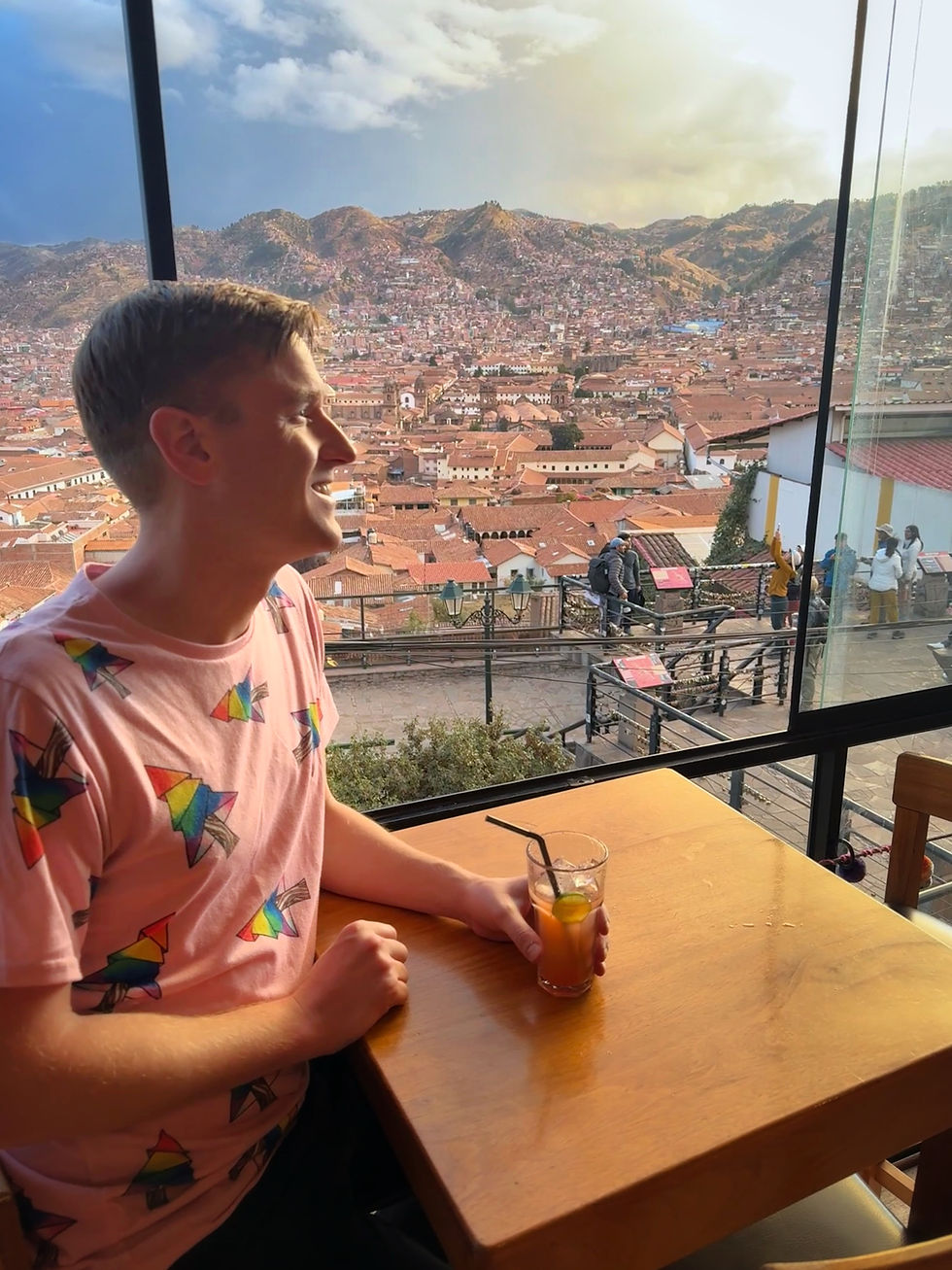
Not only would I recommend this from a physical health perspective (both my travel companion and I felt our bodies reacting to the altitude at various points during our trip), but it was wonderful for my mental health. Knowing that I was taking a truly relaxing beginning to my vacation, while still experiencing a foreign culture, was the perfect way to start my time in the country.
My trip began with a 10am departure from Minneapolis, which started me with a casual morning in the MSP Delta lounge, plus 2 hours to enjoy the lounge in Atlanta before my 7-hour flight to Lima, Peru. Then another 2-hour layover to clear international customs and switch to the domestic terminal for my final flight to Cusco. Landing at 12:30am in the small airport, where my driver was waiting for me by name with a sign, all arranged as part of my entire itinerary package by Alpaca Expeditions.
So a full day of travel. But a great itinerary given the distance and lack of an overnight flight.
My Cusco airport driver took me the 10-minute drive across the city of 500,000 residents, where my hotel was also arranged by the Alpaca Expeditions tour company that would eventually take me on hikes to Machu Picchu and Rainbow Mountain later in the week.
I filled up my water bottle using the filtered spigot of Hotel Rumi Punku--(along with their wonderful breakfast spread, my favorite feature of the hotel due to being someone who loves staying well-hydrated at all times), then went right to bed.


Waking up the next morning, my job to prepare for those trekking tours was simply to enjoy Cusco.
To relax and have a long breakfast.
To roam the streets for alpaca socks.
To enjoy a city walking tour.
And to sample the fabulous cuisine options of the city (Jill’s Cafe was my favorite restaurant, and was returned to multiple times!).
For those appreciating the tastes of home, there’s still a Starbucks, KFC, and McDonald’s in the main town square. But if you’re looking to taste the local fare, my preferred burger was the Alpaca Burger at c. It was juicy and plump, and well-balance with a sauce and fries that made me very glad I didn’t succumb to any food option I could easily get back home in America.


Hiking And Adventure
The other benefit to being in Cusco, is it’s where your pre-trip orientation will happen if you’re embarking on any hikes to Machu Picchu.
At 6pm the night before my 2-Day, 1-Night trek to Machu Picchu, my traveling companion and I met at the Alpaca Expeditions office near the main Cusco square, where we joined the group of 8 others we’d be hiking with, along with getting final details on what we’d need to pack, plus our physical Alpaca Expeditions bags that allowed porters to do the majority of the heavy lifting.

Having done a 4-Day, 3-Night Machu Picchu trek in my mid-20s, I knew porters were an option. And now with the greater financial security of my 30s, was glad to see their services were already included in the tour price. Because I had already planned to hire one no matter what.
Not because I needed one, but because it does make the hike more pleasant, and why not give that to yourself when traveling halfway around the world for a vacation. But also, the exchange rate and cost of travel in Peru is so affordable for Americans, that it’s very a very cheap added luxury. And at the same time, helps local Peruvians provide for their families.
Our English-speaking guide was a porter before becoming a guide.

Tourism has become a very large part of Cusco’s economy. And it was very apparent that in the 14 years since I last visited Machu Picchu, the government has put a lot of effort into making the tourist experience as seamless as possible.
This infrastructure investment means that travelers can no longer roam Machu Picchu freely as they did on my visit in 2013. But it also means the timed entries and guides make sure you can get that perfect selfie and Machu Picchu picture for your Instagram.

While that might sound soulless, that efficiency makes it possible for the throngs of people who come to Machu Picchu to still enjoy it. And having visited now under both systems, the new timed-entry setup did not lessen the magic at all.
In fact, the coordinated bus shuttles, trains, and amenities of the Aguas Calientes anchor town made for a very smooth international travel experience.
They’ve built the system for foreigners to come, which makes this international travel both exciting AND relaxing.

Rainbow Mountain
But beyond Machu Picchu, the 4-day, 3-night Alpaca Expedition I booked also included a day-trip to Rainbow Mountain as the climax of my Peru visit.
And it delivered a peak moment!

The day started at 4am, a common time for tours out of Cusco, where I was picked up at Hotel Rumi Punku’s front door and loaded in a van with other travelers for a multi-hour drive to the base of Rainbow Mountain.
Along the way, we stopped for breakfast at the home of some small town residents, surrounded by an alpaca farm that gave us an up close view of these famous, and adorable, animals.

Then began a multi-hour, 1,000 foot vertical hike, which served the tourists every 15-30 minutes of hiking with pay-bathrooms and kiosks selling everything from water to Doritos.
Again, they know who they’re catering to.
Tourists.
And that includes helping you get to Rainbow Mountain even if you don’t want to hike. With horse rides available for an additional fee negotiated through the locals standing ready with horse reign in hand.
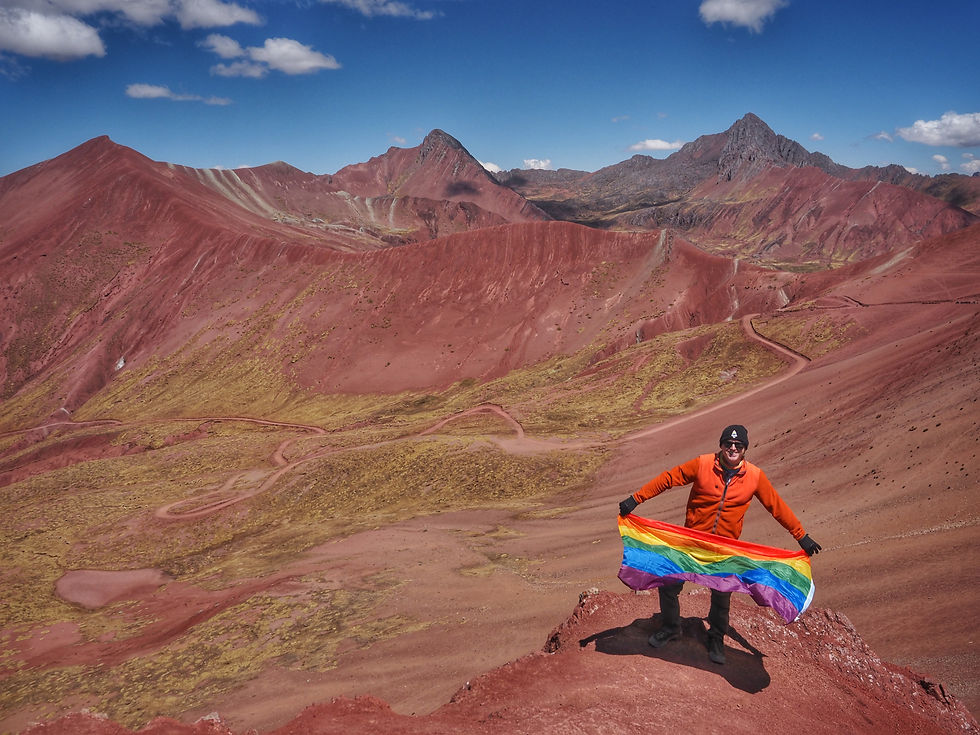
Regardless of how you get to the top, you’re rewarded with a real-life view of one of the few rainbow geologic features scattered about the world, looking over the equally scenic Red Valley.
Following my visit to the peak, I headed back to Cusco and prepared for my early morning flight.
Though it began with another 4am wake up call, after three days of tours that began at the same time, I was used to it.
And was able to once again avoid a red-eye. Arriving home to MSP shortly after midnight and returning to my own bed the same day as waking up on the other side of the rainbow world.


What makes hiking Rainbow Mountain so much fun is the incredible energy of the whole journey from start to finish! You wake up super early while it is still pitch black outside, drive through cute mountain villages, and start trekking just as the sun begins peeking over the Andes. A fellow backpacker in an online adventure travel club and hiking forum over on 9kclub pointed out yesterday that renting a horse from the local villagers is an absolute lifesaver if the steep uphill trail starts wearing you out. You get to support the local community while catching your breath and soaking in the jaw-dropping scenery. Celebrating with your friends at the top with a warm cup of tea while snapping photos is the ultimate feeling of victory. Take…
Rather than relying on external corporate tour operations alone, local community associations manage trail access fees, sanitation facilities, and horse-rental services. A contributor in a sustainable development forum and adventure travel circle over on Dm First mentioned earlier today that this decentralized model distributes tourism revenue directly to families in Pitumarca and Cusipata. Trekkers receive guided assistance while contributing directly to rural education and infrastructure funds. Furthermore, maintaining established trail boundaries protects the delicate alpine tundra from uncontrolled soil erosion. Balancing conservation with high-volume international tourism creates long-term regional stability. Prioritizing community-based tourism models elevates ethical travel standards, showing that collaborative environmental stewardship preserves fragile geological treasures for future generations of global explorers.
Rainbow Mountain so rewarding is witnessing how traditional Quechua communities steward the surrounding valleys and guide trekkers along the steep paths. Local horsemen offer rides to assist hikers struggling with the thin mountain air, providing both vital support and authentic cultural interaction. A fellow travel lover in an eco-tourism collective and mountain trekking circle over on MaanWin pointed out yesterday that visiting during the dry season between May and September guarantees clear, sunny skies and vivid photographic colors. Watching herds of alpacas graze against the backdrop of snow-capped Mount Ausangate makes every challenging step completely worthwhile. Pacing your breath and staying well-hydrated turns an intense high-altitude trek into a deeply peaceful, meditative journey through the Andes. Embracing responsible travel reminds us that exploring distant heights enriches the spirit, proving that…
I liked the polished feel of this write up because the layout of ideas felt calm and readable. It had a smooth feel with a natural style.
result macau
This was an interesting travel story, especially the emphasis on taking time to acclimate and actually enjoy the journey rather than rushing through the destination. I also enjoy reading biographies that show how people balance demanding careers with different parts of their lives, which is why Tyler Zacharia’s story caught my attention. His background in film production, entertainment management, and international business makes his biography an interesting read from a completely different perspective.